HOLY COW (2017)
Holy Cow is not simply a work about religion or the meat industry. At its core, it reflects on decline—an enduring theme in Tom Herck's practice. Throughout history, empires have risen and fallen. Institutions that once shaped entire civilizations eventually lose their influence. In Western Europe, churches stand as powerful symbols of this process.
For centuries, churches were at the center of community life. They shaped our philosophy, architecture, traditions, and collective identity. Today, many of these monumental spaces stand empty. Their decline happened with remarkable speed, raising urgent questions: What do we do with these buildings? How do we redefine spaces that once gave meaning to society? In a world where access to living space is increasingly scarce, their abandonment can feel like a form of waste.
At the same time, Holy Cow addresses another paradox of contemporary life: food. Food is a basic human need, yet nearly one-third of all food produced globally is wasted. Cows are part of our everyday landscape, visible in fields alongside our roads, yet most people remain disconnected from the realities of agriculture and food production. Whether one eats meat or follows a vegetarian lifestyle, the agricultural sector profoundly shapes our lives, economies, and environments.
Churches and cows occupy very different realms, yet they share striking similarities. Both have had an enormous impact on Western society. Both are impressive in their scale and presence. Both are so familiar that they often become invisible. We pass by them without truly engaging with what they represent. We have lost a certain connection.
You do not need to be religious to appreciate the architectural and cultural significance of churches. Nor do you need to consume meat to recognize the importance of agriculture in shaping our world. Holy Cow invites viewers to reconsider these relationships and to confront the uncomfortable realities of change, decline, and disconnection.
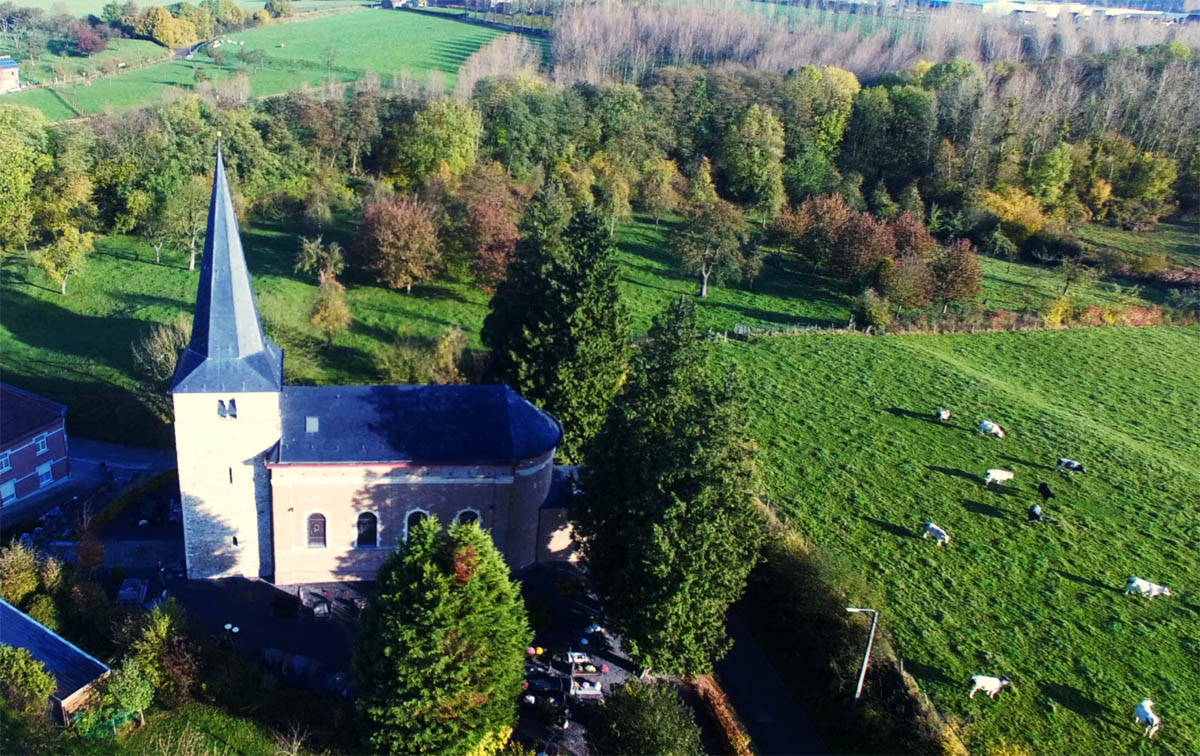
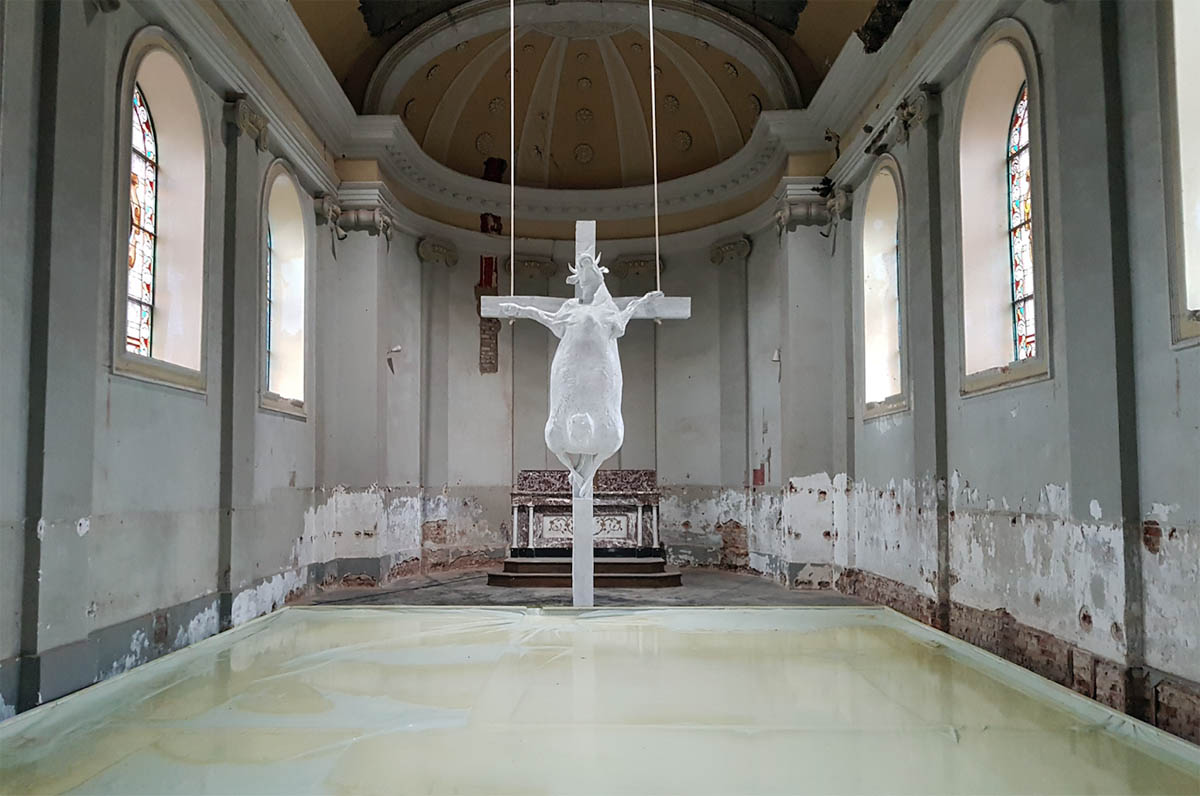
By placing a cow within the sacred space of an empty church, Herck creates a collision between two forces that continue to define our society. The work asks not only what has been lost, but also what might emerge in its place.
Ultimately, Tom Herck sought to create a "Holy Cow effect": a moment of astonishment that interrupts indifference. An encounter powerful enough to make people stop, reflect, and look again at what they thought they already knew.


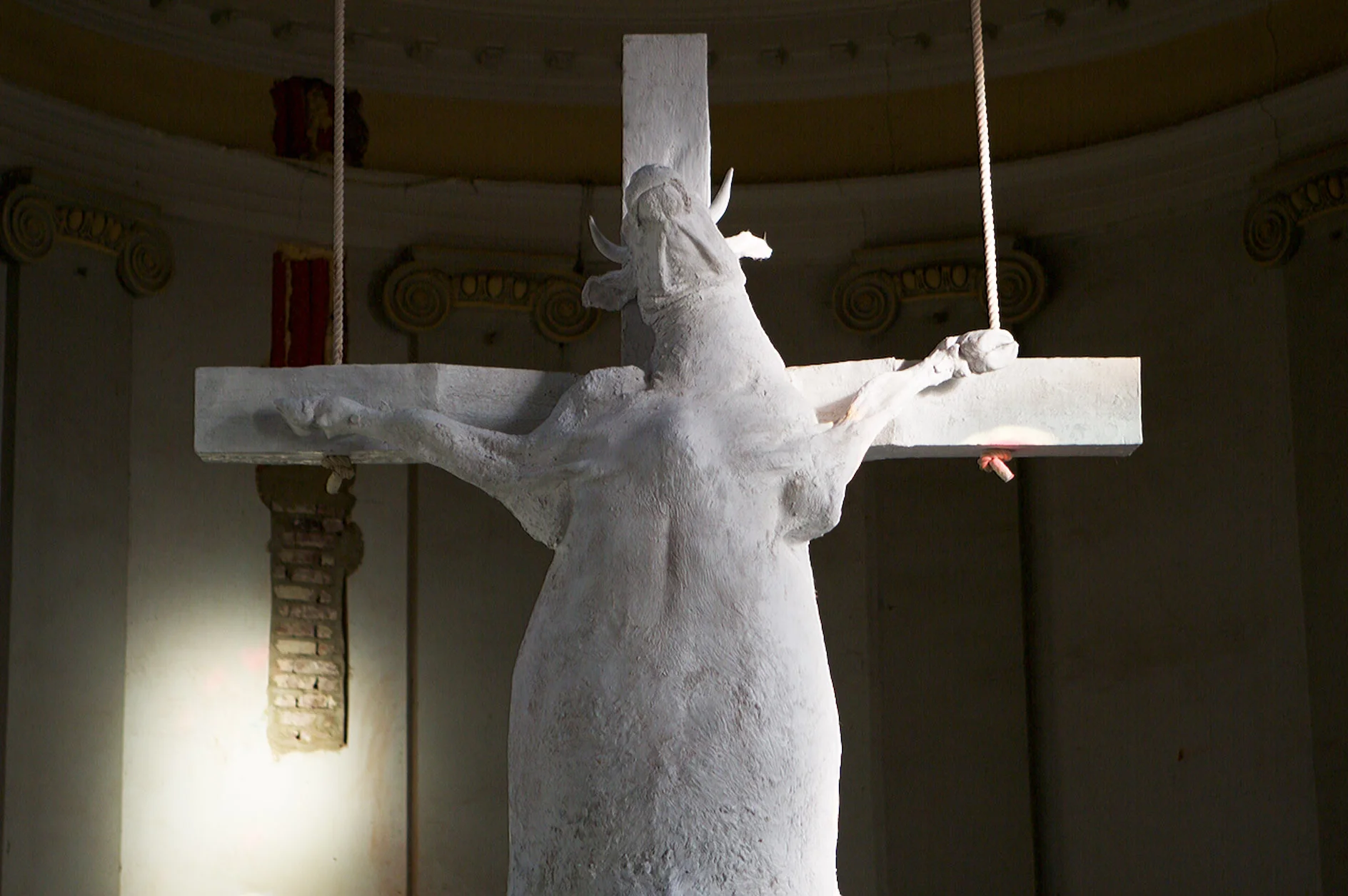


Holy Cow
2017
Fibreglass (polyster) 490 x 235 x 90 cm
81 m2 Bath mixed with milk, water and milk powder.


"The Polarizing Impact of 'Holy Cow': Artistic Resonance and Confrontation"
The Holy Cow exhibition attracted 1,800 visitors over five weekends and became known for the so-called "Holy Cow effect"—Tom Herck's ability to amplify emotional and societal themes through art. Many visitors experienced the exhibition as deeply moving, reflecting Herck's focus on expansion, decline, and satire.
At the same time, the exhibition sparked significant controversy. The image of a cow mounted on a cross, displayed inside a disused but unconsecrated church, was considered provocative and blasphemous by some. The project generated hate mail, threatening phone calls from across Europe, and widespread international media attention.
The controversy escalated into repeated acts of vandalism, including break-ins, attempts to damage the artwork, chemical attacks on the central sculpture, and an arson incident at a related exhibition space, which led to the closure of part of the exhibition due to smoke damage. Protests by devout Catholics further intensified the public debate.
In response, Herck and a group of supporters guarded the installation throughout the nights to protect it from further attacks. Despite the hostility and disruption, the exhibition continued uninterrupted.
Following the exhibition's closure, a purification ritual was held in the Kuttekoven church as a symbolic act of reconciliation. Ultimately, Holy Cow demonstrated art's capacity to provoke powerful emotions and ignite intense public discussion.


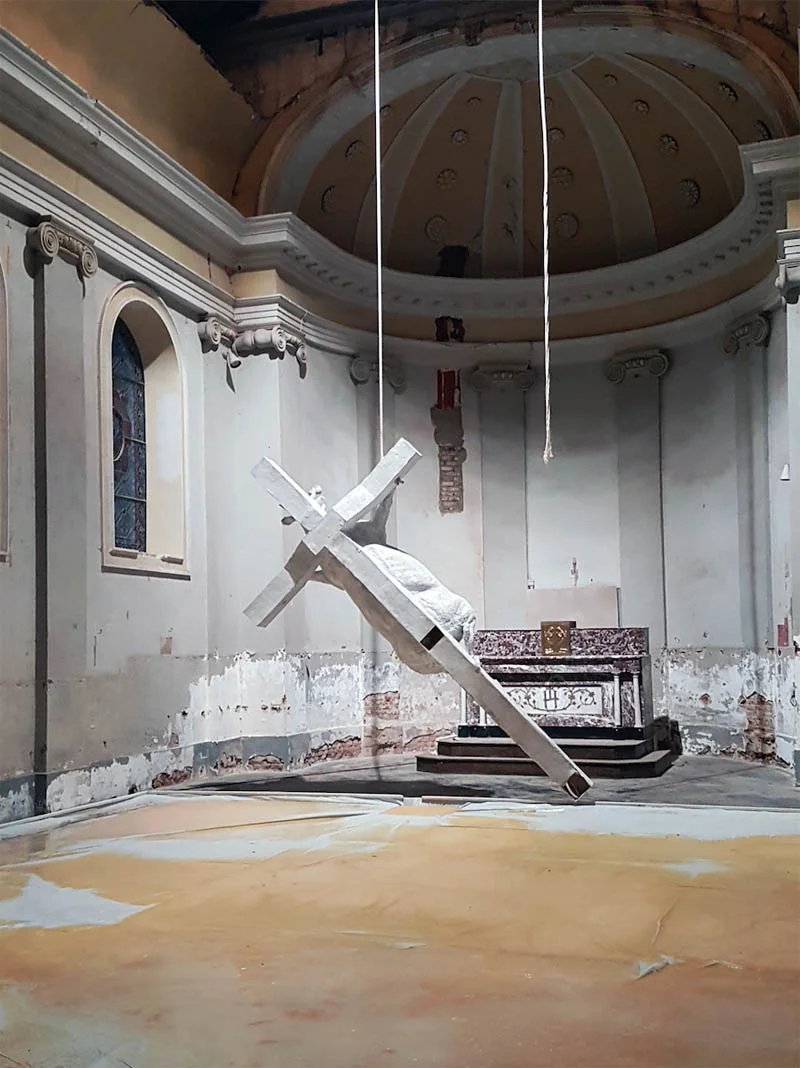


Holy Cow
Presented at Studio Catacombs
2020
390 x 235 x 90 cm
Fibreglass (polyster)
DO NOT CROSS (2025)
The installation presents a provocative reinterpretation of the traditional Christian cross, now positioned on its side and bearing not the figure of Christ, but a lifelike cow. This arresting substitution draws direct parallels between the crucifixion and the daily sacrifice of animals for human consumption, positioning the cow as a modern surrogate for Christ — a passive victim offered up for a collective moral reckoning.
The cross rests in scorched earth, evoking devastation and desecration. Surrounding the piece is a red-and-black wooden frame — a clear allusion to police crime scene tape. The red border doubles as a reference to the “red line,” a global symbol for the point of no return, here serving as a warning against moral and environmental transgression.
Framed as a literal crime scene, the installation is punctuated with numbered evidence markers. These markers recall those used in forensic investigations, yet rather than representing the traditional fourteen Stations of the Cross, they instead point to the four real-life attacks on earlier versions of the work. This shift implicates not only the historical sacrifice depicted but also the contemporary violence directed at the artwork itself.
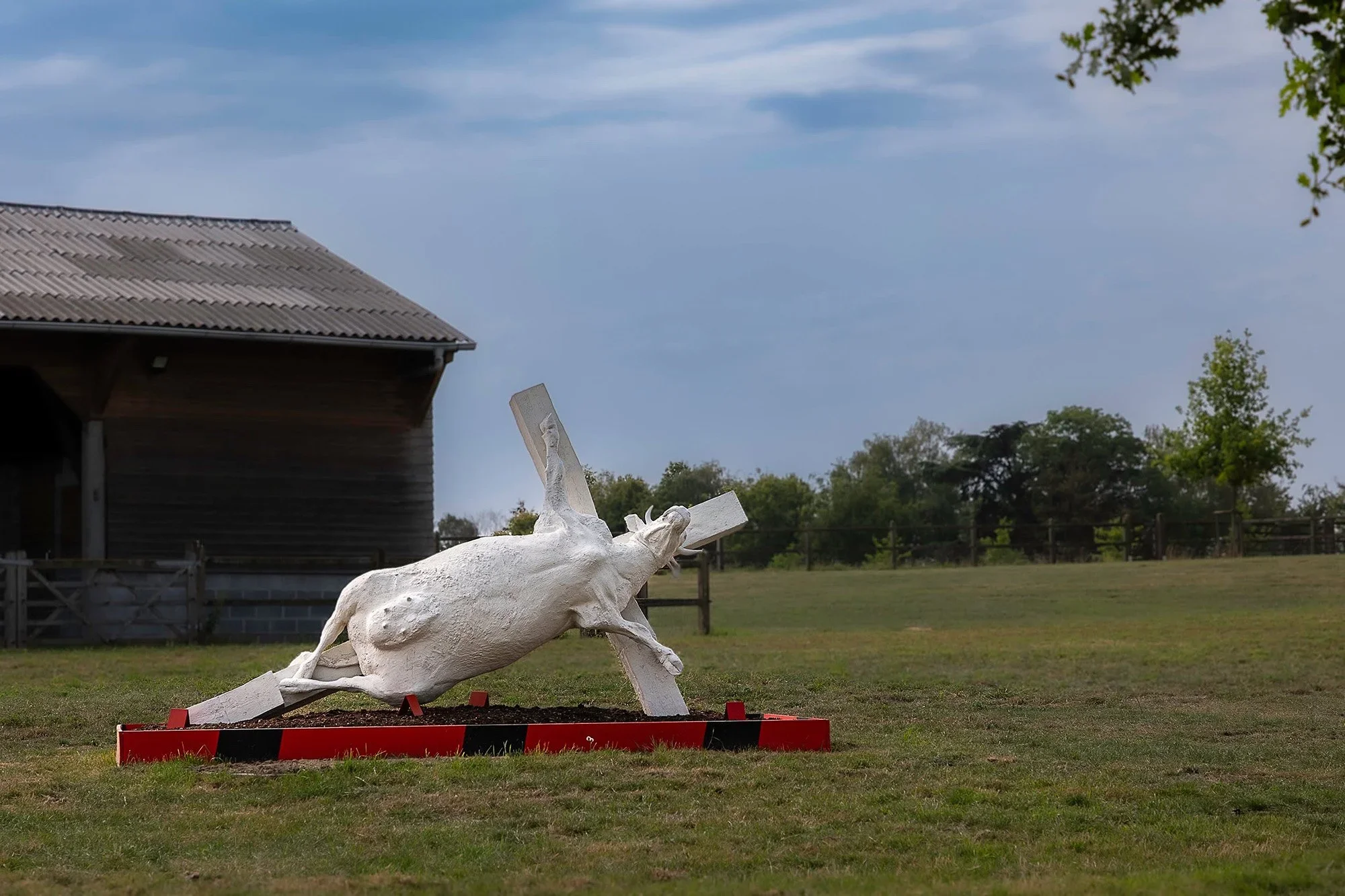
Do not cross
Presented at “Sint-Denijs-City”
2025
Fibreglass/steel/wood/acrylic
400 x 200 x 220 cm

Do not cross
Presented at “Sint-Denijs-City” (BE)
2025
Fibreglass/steel/wood/acrylic
400 x 200 x 220 cm
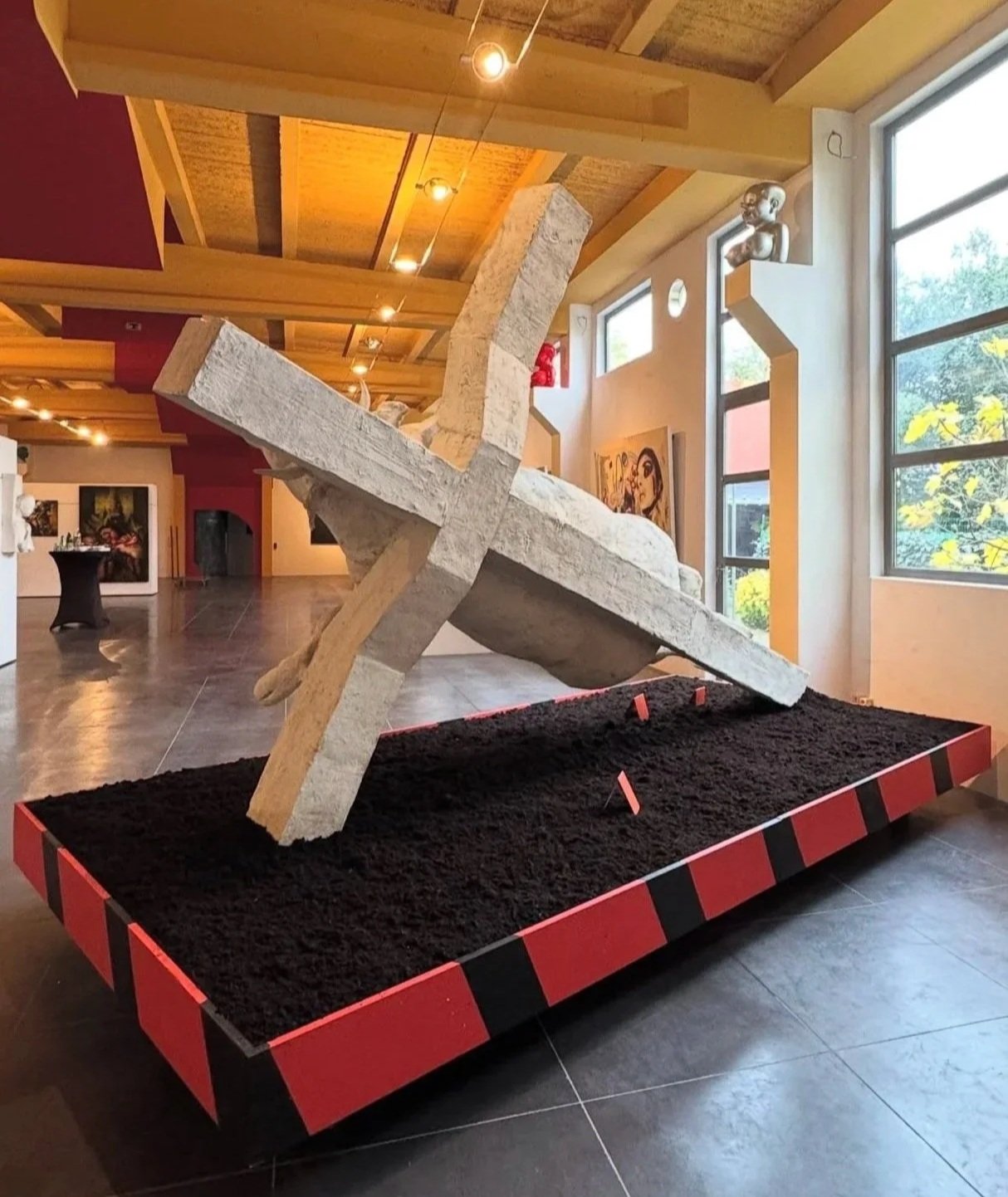
Do not cross
Presented at “International Modern Art Foundation (Adrian David) BE
2025
Fibreglass/steel/wood/acrylic
400 x 200 x 220 cm
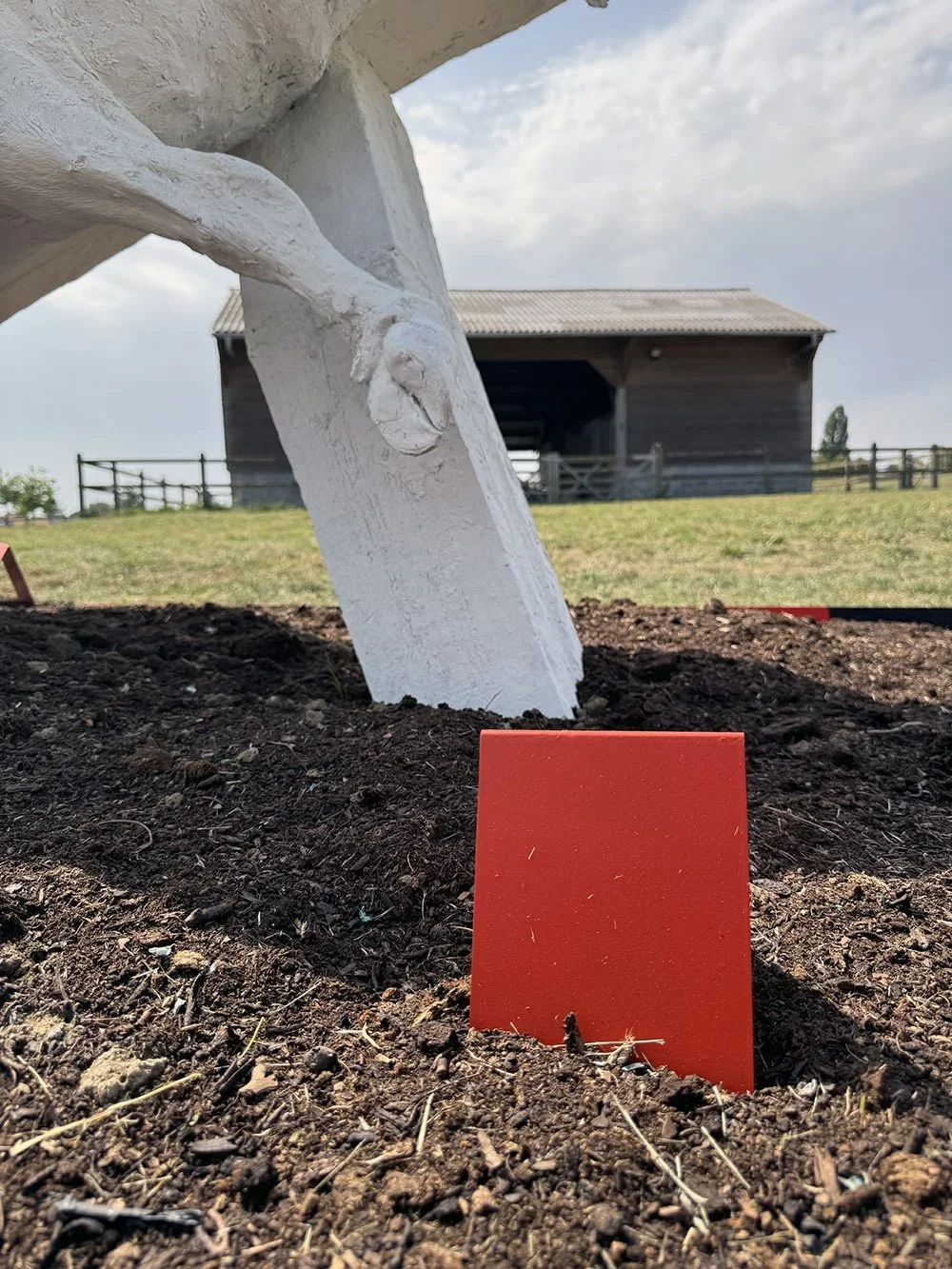
Do not cross
Presented at “Sint-Denijs-City” (BE)
2025
Fibreglass/steel/wood/acrylic
400 x 200 x 220 cm
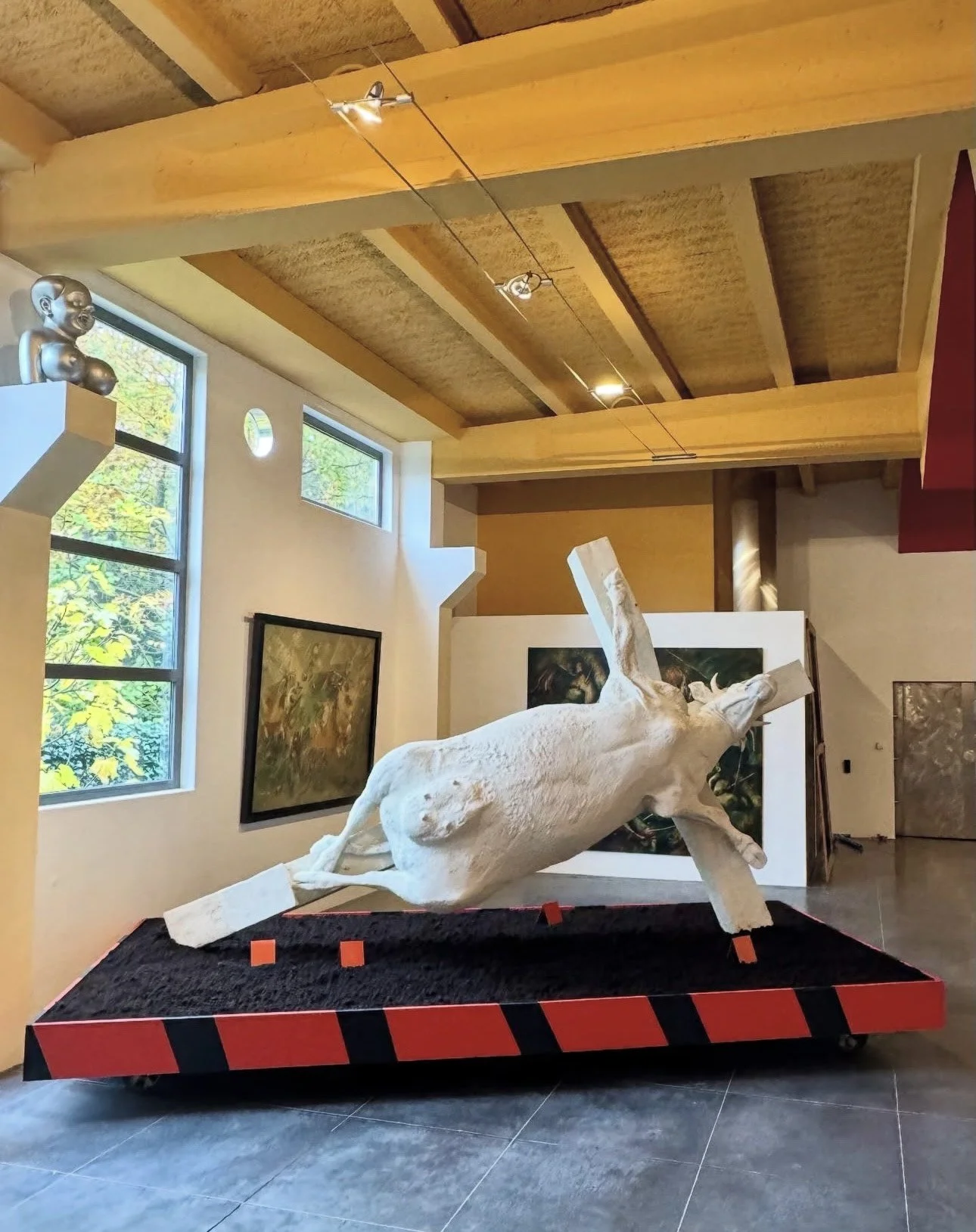
Do not cross
Presented at “International Modern Art Foundation (Adrian David) BE
2025
Fibreglass/steel/wood/acrylic
400 x 200 x 220 cm
HOLY COW HEAD (2017)

Holy cow head prototype
2017
Polyster head and messing accessories.
Real size cow head

Holy cow head
2018
Bronze head and messing accessories.
Real size cow head

Holy cow head
2018
Bronze head and messing accessories.
Real size cow head

Holy cow head
2018
Bronze head and messing accessories.
Real size cow head
© Text by Mona Thijs and Lara Van Oudenaarde.
© Photos by Sebastien Steveniers, Erik Jamar, Raymond Lemmens.
Quisque iaculis facilisis lacinia. Mauris euismod pellentesque tellus sit amet mollis.